Tattoo Removal
One of our most popular services, we offer tattoo removal services at our clinic in Croydon, covering areas in Caterham, Warlingham, Surrey and other parts of South London.


Learn About Tattoo Removal
There are many reasons people choose to remove a tattoo. Often tattoos are created at a particular stage in life, and as circumstances change, so do personal preferences. What once felt meaningful may no longer reflect who you are.
In other cases, tattoos simply fade or blur over time. Ageing skin, sun exposure and ink migration can affect clarity, leaving the design looking uneven or discoloured. Some clients also seek removal to prepare the area for a new design where a cover-up is not suitable.
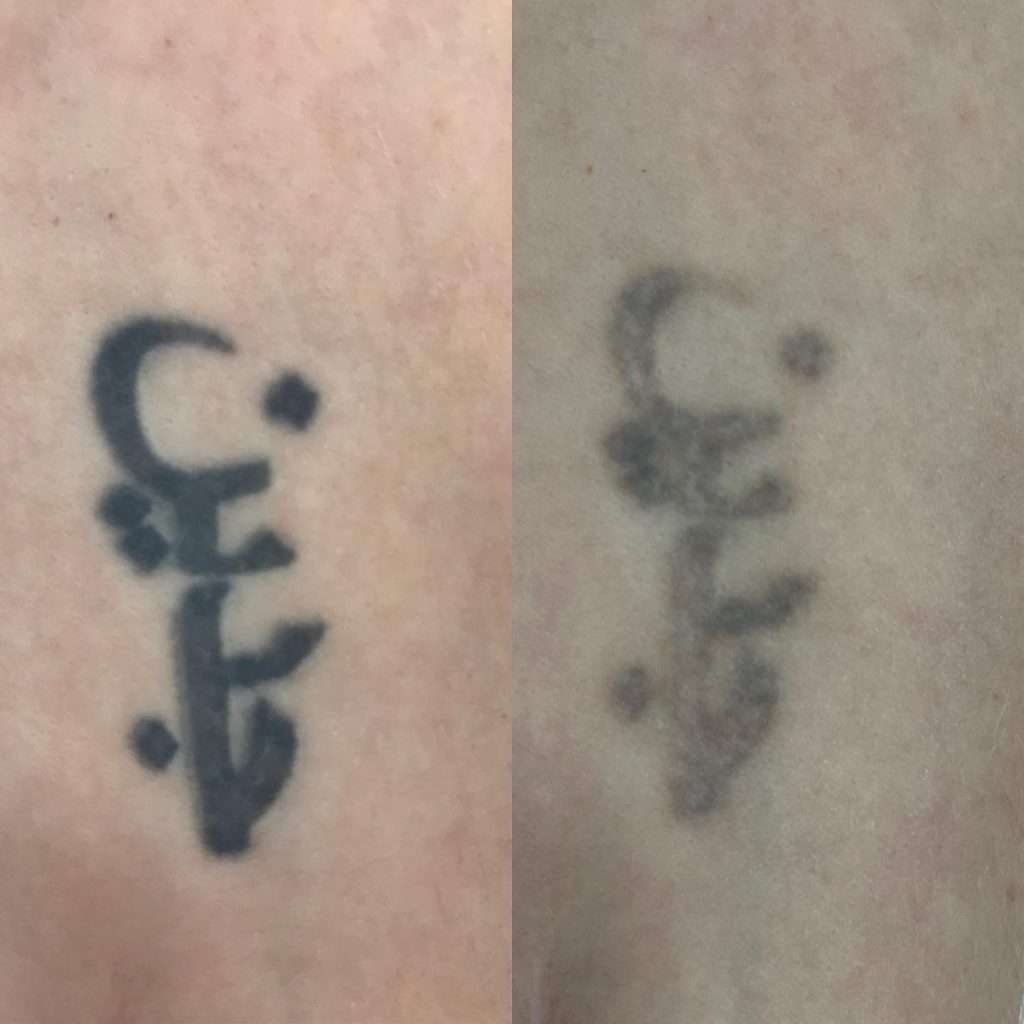
At Simply Scalp, we provide safe and professional laser tattoo removal tailored to your skin type and tattoo characteristics. You can explore examples of treatment progress in our results gallery or read client experiences in our reviews.
How the Tattoo Removal works?
As a Level 5 accredited laser practitioner, we use advanced Q-Switched Nd:YAG laser technology to break down unwanted ink safely and effectively. The laser targets pigment particles beneath the skin, fragmenting them into smaller particles that your body’s lymphatic system can naturally remove over time.
The number of sessions required depends on factors such as ink depth, colour, age of the tattoo and skin type. Body tattoos are often deeper and more saturated than cosmetic pigment, meaning multiple sessions are usually required. Sessions are spaced carefully to allow proper healing and pigment clearance.
Aftercare plays an important role in achieving the best outcome.
If you are considering removal to prepare for new cosmetic treatment or corrective work, this can be discussed during consultation.
Frequently Asked Questions:
The number of sessions required depends on several factors, including the size, colour, age and depth of the tattoo. Professional tattoos tend to be more deeply saturated and may require more sessions than amateur tattoos. On average, most clients require multiple treatments spaced several weeks apart to achieve significant fading or full removal. Your progress is assessed after each session to determine how your skin is responding. A personalised treatment plan will be discussed during consultation.
Laser tattoo removal can cause mild to moderate discomfort, often described as a quick snapping sensation against the skin. Sensitivity varies depending on the tattoo location and your individual pain threshold. The sessions are relatively quick, and cooling techniques are used to minimise discomfort. Any tenderness usually settles within a few hours after treatment. Most clients find the process manageable without the need for anaesthetic.
When performed by a qualified practitioner using medical-grade laser equipment, tattoo removal is considered safe and controlled. The Q-Switched laser specifically targets pigment particles without damaging surrounding tissue when used correctly. Temporary redness, swelling or light blistering can occur as part of the normal healing response. Proper aftercare reduces the risk of complications and supports optimal healing. A full consultation is carried out beforehand to ensure suitability.
In many cases, tattoos can be significantly faded or fully removed, but results vary depending on ink colour, depth and skin type. Black and darker inks typically respond more effectively to laser treatment than lighter colours. Some faint shadowing may remain after complete removal, particularly with heavily layered tattoos. If the goal is a cover-up rather than full removal, fewer sessions may be required. Realistic expectations are discussed clearly during your consultation.
Immediately after treatment, the area may appear red or slightly swollen. Mild blistering or sensitivity is possible and usually resolves within a few days. It is important to keep the area clean, avoid sun exposure and follow all aftercare instructions carefully. The body will gradually clear the fragmented ink particles over several weeks. A follow-up appointment will be scheduled to monitor healing and plan the next session if required.
Get In Touch
Please fill out the enquiry form and provide as much detail as possible and we’ll get back you shortly.