
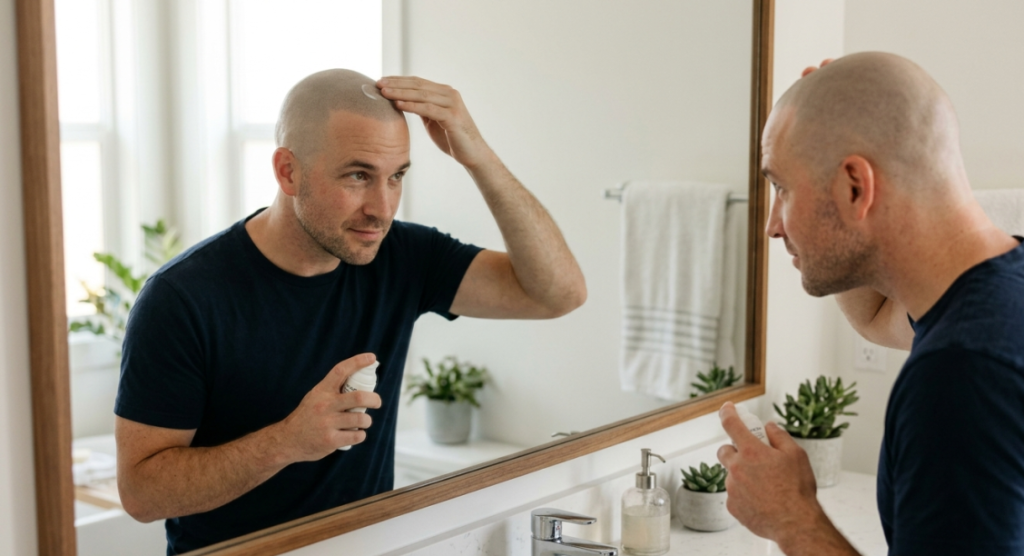
What it really takes to keep your SMP looking sharp
You’ve invested in your SMP and it looks exactly how you wanted. The question now is how to keep it that way. Scalp micropigmentation maintenance comes down to three things: understanding what fades pigment, knowing when to book a touch-up, and building a few simple daily habits. Follow this and your results will stay looking clean and sharp for years.
Why scalp micropigmentation fades over time
All pigment placed in the skin changes over time. That’s not a flaw in the process — it’s just biology. Your skin constantly renews itself, and as it does, pigment gradually disperses at the edges, softening the dots that give SMP its crisp, stubble-like appearance.
Sun exposure is the biggest accelerant. UV radiation breaks down pigment molecules, and because your scalp sits at the very top of your body, it catches more sun than almost anywhere else. Without protection, even beautifully placed pigment can look noticeably faded within a couple of years.
Lifestyle factors play a role too. Frequent swimming in chlorinated pools, heavy sweating from intense exercise, and certain skincare products, particularly anything exfoliating or acid-based, can all speed up pigment breakdown. None of these are reasons to change your life, but they’re worth knowing about so you can make small adjustments that protect your investment.
The daily skincare routine that preserves your results
Maintaining micropigmentation results doesn’t require an elaborate routine. It requires a consistent one. Two things matter most: moisturiser and SPF.
A light, fragrance-free moisturiser applied daily keeps the scalp supple. Dry, flaky skin scatters light unevenly and makes pigment look patchy and dull, even when the underlying work is technically sound. A simple fragrance-free lotion or dedicated scalp balm works well. Apply it after showering when your skin is still slightly damp so it absorbs properly.
SPF is non-negotiable. Use a broad-spectrum sunscreen of at least SPF 30 on your scalp every day you’re spending time outdoors. On beach days or in summer sun, SPF 50 is the better call. Spray formulas or lightweight fluid sunscreens designed for the face tend to work best on a shaved scalp: they absorb quickly, don’t leave a white cast, and won’t clog pores. This single habit does more to preserve your pigment than anything else.
Avoid harsh exfoliants on the scalp. AHA and BHA products are brilliant for skin renewal, but that’s exactly the problem: they accelerate the natural cell turnover that gradually fades pigment. If you’re using any acid-based product on your scalp, switch to something gentler.
When to book an SMP touch-up
Most clients need an SMP touch-up somewhere between 18 months and 3 years after their original treatment. That’s a wide window because it genuinely varies: skin type, lifestyle, sun exposure, and how consistently you protect your scalp all affect the rate of fade.
The clearest sign you’re due a touch-up is when the dots start to look less defined. In good lighting you might notice the pigment looks lighter, softer at the edges, or slightly uneven in colour distribution. It’s a gradual change, so you often notice it more in photos than in the mirror.
A touch-up session is typically shorter and simpler than the original treatment. It’s not starting from scratch: it’s refreshing what’s already there. In most cases, one session is all that’s needed. Think of it like getting your hair clipped. The underlying work is still solid; it just needs a little attention to stay looking its best.
Some clients go longer between touch-ups by being disciplined with their SPF. Others come back more regularly because they spend a lot of time outdoors or in the water. There’s no single right answer: it’s about what your scalp looks like and what standard you want to maintain.
Products to use and things to avoid
Beyond SPF and moisturiser, a few product choices are worth thinking about. If you’re using a scalp cleanser or shampoo, fragrance-free and sulphate-free formulas are kinder to pigmented skin. Sulphates are strong detergents that can dry out the scalp and accelerate surface-level pigment loss over time.
Some clients ask about head polishes or scalp scrubs. I’d steer clear of anything abrasive on a pigmented scalp: physical exfoliation and SMP don’t mix well long-term. A gentle wash with your fingertips is all the cleansing your scalp needs.
If you’re having any other skin treatments, such as laser, IPL, or chemical peels, always let the practitioner know you have scalp micropigmentation. Laser in particular can affect pigment, and the scalp area should be avoided or treated with considerable caution. It’s easy to forget to mention, but important that the professionals involved know.
Frequently Asked Questions
How often does scalp micropigmentation need a touch-up?
Most people need an SMP touch-up every 18 months to 3 years. The exact timing depends on your skin type, how much sun exposure your scalp gets, and how consistently you protect it with SPF. Clients who use sunscreen daily and follow a simple skincare routine tend to go longer between sessions.
What’s the best sunscreen for a scalp with SMP?
A broad-spectrum SPF 30 is the minimum baseline, but SPF 50 is better for extended time outdoors. Lightweight fluid formulas or spray sunscreens designed for the face absorb quickly and won’t leave residue or clog pores on a shaved scalp. Daily use makes the single biggest difference to how long your pigment retains its clarity.
Can I still go swimming after scalp micropigmentation?
Yes, once your scalp is fully healed after treatment, swimming is fine. Chlorinated pool water and prolonged salt water exposure can accelerate pigment fade over time, so it’s worth rinsing your scalp after swimming and moisturising afterwards. It doesn’t mean avoiding the pool entirely, just being a little mindful about aftercare.
Will moisturising really make a visible difference to maintaining micropigmentation results?
It genuinely does. Dry or flaky skin scatters light in a way that makes pigment look patchy and faded even when the underlying work is technically fine. A simple daily fragrance-free moisturiser keeps the scalp surface smooth and even, which means the pigment reads more clearly and the overall result looks sharper.
What happens if I leave my SMP without any touch-ups for a long time?
The pigment gradually softens and lightens rather than disappearing suddenly. Over several years without a touch-up, the dots lose their definition and the overall look becomes less crisp. The good news is that even after a long gap, a single refresh session can usually bring the result back to a sharp, natural appearance without any issues.