
SMP crown density: why this area needs its own approach
The crown is one of the most technically demanding areas to treat with scalp micropigmentation. It catches light differently, sits at an angle most people never think about, and has a natural hair growth pattern that makes uniform pigment placement almost impossible. When it comes to SMP crown density work for men with thinning hair, getting it right takes a genuinely different kind of thinking.
What makes the crown so tricky?
Most men lose density gradually across the top of the scalp, but the crown presents its own challenges that go beyond simple coverage. The natural whorl pattern — that circular swirl of hair growth at the back of the head — means hair radiates outward in multiple directions. This has to be reflected in the pigment placement, or the result will look flat and unconvincing.
Lighting is another factor that’s easy to underestimate. Overhead light hits the crown directly and can expose any inconsistencies in dot density or placement angle. Unlike the hairline or temples, which are viewed mostly head-on, the crown is almost always seen from above — and that changes everything about how I plan the treatment.
Skin texture in the crown can also vary quite a bit, especially in men with long-term thinning. Skin that has been exposed over time responds to pigment differently than skin with good surrounding hair coverage. I always assess this carefully during consultation before we do anything else.
How I plan pigment placement for the crown
When I’m working on scalp micropigmentation in the crown area, I start by mapping the whorl. This tells me the direction each cluster of dots needs to follow. Rather than placing pigment in a uniform grid, I work in a radiating pattern that mirrors how natural hair actually grows in that part of the scalp.
Density is built gradually. I never try to achieve full coverage in a single session, especially in the crown. Starting lighter and layering in additional density across sessions produces a far more natural result and gives me room to fine-tune as we go. It also gives the skin time to settle, which affects how the pigment heals and how the final tone looks.
Colour matching matters here too. The crown is often exposed to more light than the sides and front, which can make pigment appear slightly lighter or darker depending on the shade used. I mix and adjust carefully to make sure the crown blends seamlessly with surrounding areas rather than reading as a separately treated zone.
What results look like for men with thinning at the crown
For men who want to keep some length and aren’t looking to shave their head, a crown hair tattoo approach used as a density treatment can make a real difference. The goal isn’t to create a shaved-head illusion — it’s to restore the appearance of natural, healthy density in an area where hair has become sparse.
Done well, the result should look like your own hair, just thicker. People around you won’t be able to identify the treatment — they’ll simply notice that your hair looks fuller. That’s exactly what I aim for at Simply Scalp with every crown density treatment I carry out.
I’ve worked with men at various stages of thinning, from early diffuse loss to more significant crown coverage concerns. The crown hair tattoo technique I use adapts to each situation, and I always take time in the consultation to explain clearly what’s achievable and what the process will involve for your specific pattern.
Frequently Asked Questions
How many sessions does SMP crown density treatment typically take?
Most crown density treatments take two to three sessions. I build pigment gradually to ensure a natural result, with each session allowing the skin to settle before we assess what’s needed next. The number of sessions depends on the extent of thinning and how the skin responds to treatment.
Will SMP in the crown area look obvious up close?
When planned correctly, scalp micropigmentation in the crown area should be undetectable. I work with your natural whorl pattern and adjust dot size and spacing to match your existing hair. The aim is always a result that looks like your own hair at greater density, not a treated area.
Can the crown hair tattoo technique work if I still have hair there?
Yes, and this is actually the ideal scenario for density work. The crown hair tattoo approach I use is designed for men who have existing hair but are experiencing thinning. The pigment dots sit beneath and between your natural hairs, creating the impression of fuller coverage without requiring you to shave.
Does scalp micropigmentation in the crown area fade differently than other areas?
The crown can fade at a slightly different rate because of how it’s exposed to light and friction from headrests and pillows. I factor this into my pigment selection and density planning. Regular maintenance appointments, typically every few years, help keep the colour and coverage looking consistent across the whole scalp.
What should I expect during my consultation for SMP crown density?
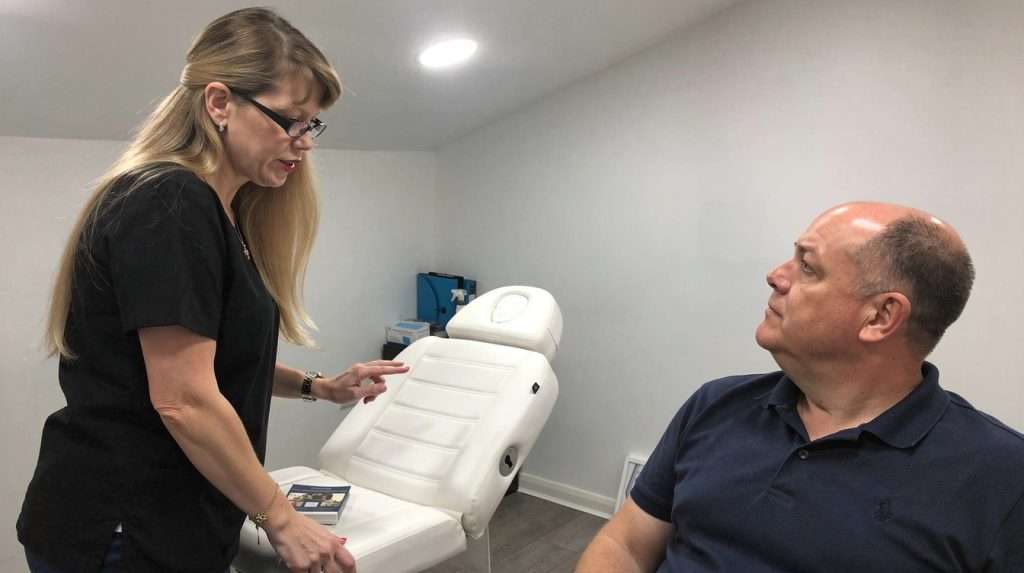
I’ll look at your whorl pattern, skin type, existing hair density, and the extent of thinning during your consultation. We’ll talk through realistic outcomes and the number of sessions likely needed. I always carry out consultations personally so you get clear, honest information tailored to your specific situation before committing to anything.