
Scalp Micropigmentation For Scalp Scars
Specialist scar camouflage treatment in Purley, South London.

Scar Camouflage with Scalp Micropigmentation

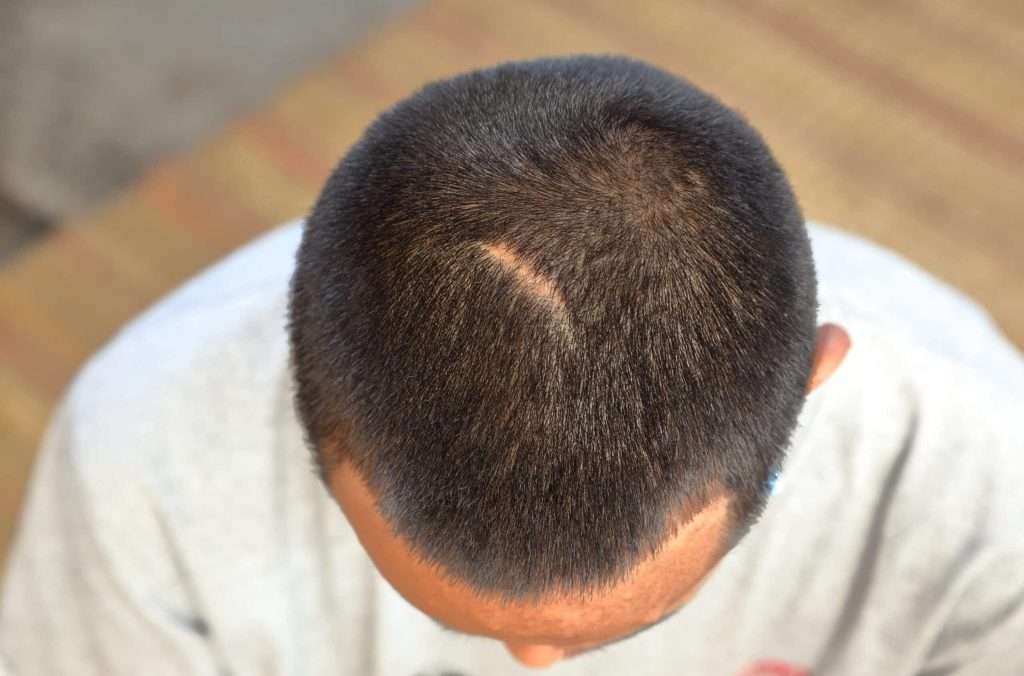
Scars on the scalp whether from FUE or FUT transplant surgery, injury, or medical procedures can be difficult to conceal and may affect confidence. At Simply Scalp in Purley, South London, scalp micropigmentation (SMP) is used to soften the visibility of scars and restore a more uniform appearance.
Our technique carefully deposits pigment into scar tissue and surrounding scalp to replicate natural hair follicles. This reduces contrast between the scar and surrounding skin, helping the area blend more seamlessly. You can view examples of transplant and trauma cases in our results gallery.
Scar tissue absorbs pigment differently from healthy skin, so each treatment is customised based on texture, tone, and healing pattern to achieve realistic improvement.
Is Scar Camouflage Right for You?
SMP for scars is most effective on mature, settled scars typically at least 12 months after surgery or injury. Treatment works well for transplant strip scars, FUE dot scarring, and certain medical or trauma-related scars.
During consultation, the scalp is assessed for tissue condition, pigmentation potential, and long-term suitability. If you are also managing alopecia or wider hair loss, a combined approach may be discussed. For further details about healing and maintenance, please see our FAQs.
Realistic Expectations and Long-Term Results
SMP reduces the visibility of scars but does not remove them or alter their texture. Raised or indented scars may still be detectable to touch, and some tissue types may fade more quickly than others.
Results typically last several years before a refresh session is required. Ongoing sun protection and proper aftercare help maintain pigment stability. Transparency is central to our consultation process, and treatment is only recommended where realistic improvement can be achieved.
For insight into client experiences, you may also wish to read our reviews.
Frequently asked questions:
Pigment in scar tissue typically lasts between three and five years, though this varies depending on the scar's age, texture, and how well it retains colour. Scar tissue lacks the same blood flow as healthy skin, which can affect longevity. Sun exposure, skin turnover, and lifestyle factors also influence fading. Most clients return for a refresh session after a few years to maintain the camouflage effect. During the consultation, expectations are set based on the specific scar being treated and how it is likely to hold pigment over time.
Sensation varies depending on the scar. Some scar tissue has reduced nerve sensitivity and feels less uncomfortable than healthy skin, while other scars, particularly newer ones, can be more tender. The practitioner adjusts pressure and technique to work within your comfort level. Topical numbing is not typically used, but breaks can be taken if needed. Most clients describe the feeling as tolerable and manageable. If your scar is hypersensitive or still healing, treatment may be delayed until the tissue has fully settled and sensation has normalised.
Not all scars are suitable. Mature, flat scars from surgery, trauma, or hair transplants tend to respond best. Keloid scars, hypertrophic scars, or those still changing in colour or texture may not be appropriate for pigment work. Active skin conditions, recent wounds, or scars less than 12 months old are generally excluded. A consultation is essential to assess suitability. The practitioner will examine the tissue, ask about medical history, and explain whether camouflage is likely to improve appearance or if alternative options should be considered first.
Most scar camouflage treatments require two to three sessions to build density and achieve a balanced result. The first session introduces pigment and tests how the scar tissue responds. A follow-up is scheduled six to eight weeks later to assess retention and add further detail. Additional sessions may be needed for larger scars, uneven texture, or areas where pigment has faded unevenly. Each case is different, and the number of sessions is discussed during the consultation based on scar size, depth, and the level of camouflage you are aiming to achieve.
Get In Touch
Please fill out the enquiry form and provide as much detail as possible and we’ll get back you shortly.