
Scalp Micropigmentation For Men
Professional hair loss treatment for men in South London.
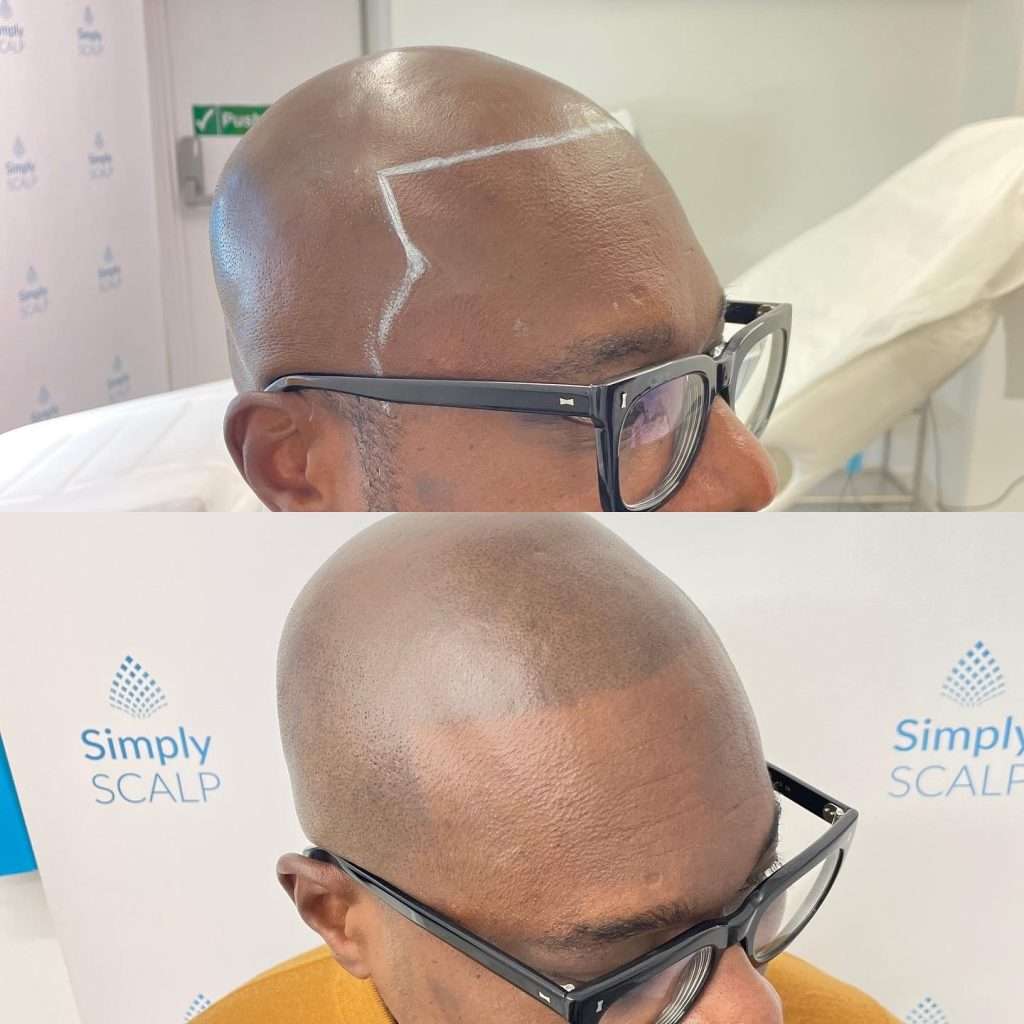
A Modern Solution for Male Hair Loss

If you’re experiencing hair loss, you’ve likely explored various options. Many traditional solutions are invasive, high-maintenance, temporary, or deliver inconsistent results.
Hair transplant surgery can leave visible scarring, particularly as hair continues to thin over time. Medications such as finasteride or minoxidil may offer limited improvement and are not suitable for everyone. Concealers and hair systems require ongoing upkeep and can feel restrictive.
At Simply Scalp in Purley, South London, scalp micropigmentation (SMP) offers a non-surgical alternative. By replicating the appearance of natural hair follicles, SMP restores the look of a defined, closely shaved hairline or adds visual density to thinning areas. You can view real client transformations in our results gallery.
A Permanent Solution to Scalp Contrast
This treatment works by reducing the visual contrast between exposed scalp and remaining hair. Carefully placed pigment impressions recreate the look of natural stubble, creating a consistent and structured appearance. The result is clean, defined, and low-maintenance, ideal for men who prefer a short or shaved style.
Each treatment is tailored to your natural hair colour, skin tone, and long-term grooming preferences. For men with transplant scarring, SMP can also incorporate scar camouflage techniques to improve overall balance.
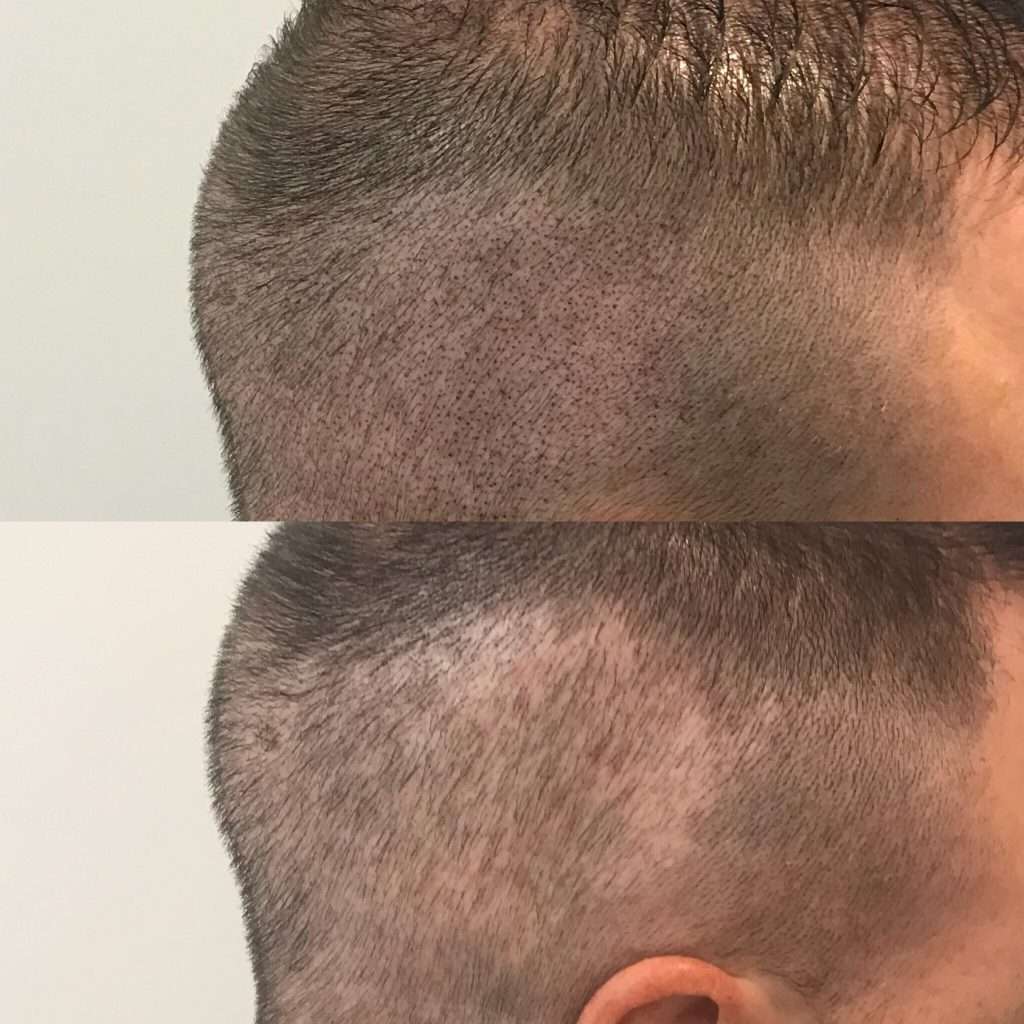
Is SMP Right for You?
Men with receding hairlines, crown thinning, total hair loss, or alopecia often respond particularly well to this approach. Suitability depends on scalp condition, skin type, and realistic expectations. Very oily skin or a history of keloid scarring may require additional assessment during consultation.
The process is completed over multiple sessions to allow colour to settle naturally. Aftercare and healing timelines are discussed in detail beforehand, you can find further information in our FAQs.
If you’re exploring treatment options for yourself or comparing services for women, our consultation process ensures clarity before any commitment is made.
Frequently asked questions:
Most clients require two to three sessions to achieve a natural, even result. The first session establishes the foundation, and subsequent appointments build density and refine tone. Healing between sessions allows the practitioner to assess how the pigment has settled and adjust accordingly. Some clients with extensive thinning or very light skin may benefit from an additional session. The exact number depends on individual skin response, desired density, and the area being treated. Each session is spaced several weeks apart to allow proper healing.
The pigment is formulated to remain stable, but it will gradually lighten as it breaks down naturally beneath the skin. It does not typically shift to blue or green tones when applied correctly. Sun exposure, skin type, and immune response all influence how the colour fades. Some clients notice the pigment becoming softer or less defined after a few years. Regular touch-ups maintain the original tone and density. Choosing the right pigment shade during the consultation helps ensure long-term consistency and avoids unnatural-looking results as the treatment ages.
Yes, shaving is safe once the scalp has fully healed, which typically takes around ten days after each session. You can use clippers or a razor as usual without damaging the pigment. The treatment is designed specifically for those who prefer a shaved or very short style. Shaving regularly helps maintain the illusion of stubble and keeps the result looking consistent. Avoid shaving during the initial healing phase, as the skin needs time to settle and the pigment to stabilise. After that, normal grooming habits can resume without restriction.
The pigment remains in the areas where it was applied, but new hair loss may create fresh contrast between treated and untreated zones. If thinning progresses, additional sessions can extend the pigment to match the new pattern. Many clients return periodically to adjust coverage as their hairline or crown changes. The treatment does not stop hair loss itself, only camouflages the appearance of it. Planning for future changes during the initial consultation helps set realistic expectations. Touch-ups are straightforward and typically require less time than the original sessions, making ongoing maintenance manageable.
From typical social distances, the result looks like natural stubble. Up close or under bright lighting, someone familiar with the treatment may recognise it as tattooed rather than grown. The pigment mimics the colour and scatter of hair follicles but not the texture or dimension of real hair. Most clients find the result convincing in everyday situations, including professional and social settings. The quality of the work, choice of pigment tone, and how well the scalp is maintained all affect how natural the finish appears. Realistic expectations help ensure satisfaction with the outcome.
Get In Touch
Please fill out the enquiry form and provide as much detail as possible and we’ll get back you shortly.