
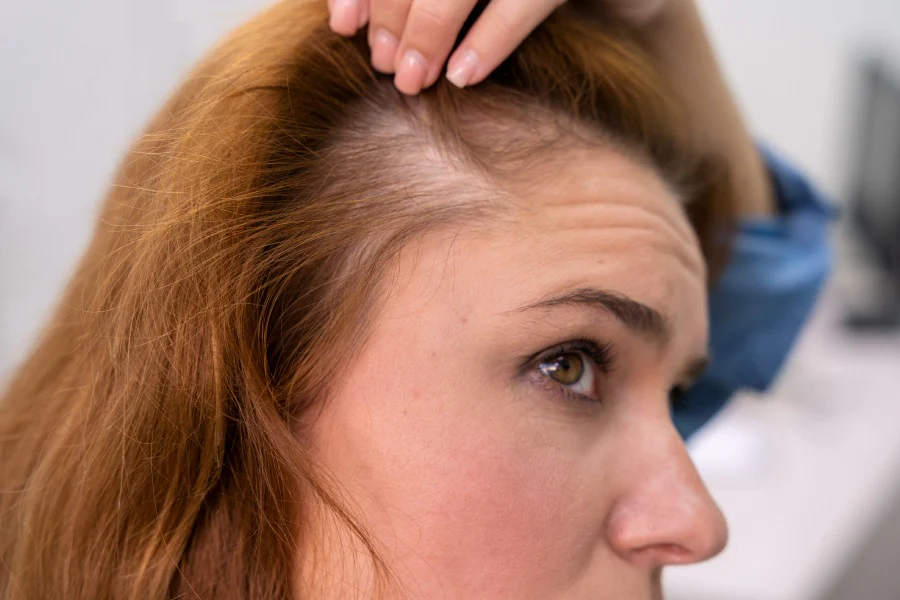
What menopausal hair thinning really calls for
You’re not imagining it, and you’re not being dramatic. If your hair has started thinning through perimenopause or menopause, it can feel like you’re losing something deeply personal. This article explains exactly how SMP works as a density solution for women experiencing hormonal hair loss, and what the process genuinely involves so you can decide whether it’s right for you.
Why menopause changes your hair
The hormonal shift that comes with perimenopause and menopause, specifically the drop in oestrogen and progesterone, directly affects your hair growth cycle. These hormones help keep hair in its active growing phase for longer. When they decline, hair spends less time growing and more time resting, which means more shedding and noticeably finer regrowth.
The result is diffuse thinning rather than a receding hairline. It often shows up first at the crown, along the parting, or across the top of the scalp. Because it happens gradually, many women only realise how significant the change has been when they see a photograph or catch their reflection in bright light.
There’s an emotional weight to this that deserves to be named. Hair carries a lot of meaning, and thinning during midlife can intersect with wider feelings about identity and change. That’s real and valid. It also means the solutions you consider deserve to be ones you genuinely feel confident about.
What SMP density actually does for thinning hair
SMP for women with thinning hair is a density procedure, not a hairline shave-down. Your hair stays exactly as it is. What changes is the appearance of the scalp beneath it.
Fine pigment impressions are placed into the scalp using a specialist technique to replicate the look of hair follicles. When your existing hair sits over these impressions, the contrast between hair and bare scalp is dramatically reduced. The result is that your hair looks visibly fuller and thicker, because the eye reads density rather than gaps.
This is particularly effective as a menopausal hair loss treatment because the thinning pattern in women is typically diffuse. There’s usually enough hair coverage for the density work to blend seamlessly. The scalp still looks like a scalp, the hair still moves and behaves naturally, and no one needs to know you’ve had anything done unless you choose to tell them.
It’s also permanent in the best sense: once the pigment is settled and healed, it doesn’t wash off or require daily maintenance. A top-up session every few years keeps the colour fresh as natural fading occurs over time.
Why women in perimenopause are particularly good candidates
Timing matters with SMP density work, and women in perimenopause or early menopause often find themselves at an ideal point. The thinning is established enough to be visible and worth treating, but there’s typically still good hair coverage to blend the pigment into naturally.
If hair loss is still actively progressing, it’s worth having a realistic conversation about what SMP can and can’t do at a given stage. In some cases, women pursue SMP alongside other hair loss during menopause solutions, such as minoxidil or nutritional support. These approaches don’t conflict; they work on different aspects of the same problem. SMP addresses the visual impact now; other treatments may slow further loss or support regrowth over time.
The consultation process is where this all gets worked through properly. During your consultation, we look at your pattern of thinning, your hair colour and texture, and what outcome would genuinely make a difference to you. That conversation shapes everything that follows.
What the procedure involves for women
For a female density SMP procedure, your hair isn’t shaved or cut. You come in with your hair as it normally is, and the pigmentation work is done directly onto the scalp, working through and around your existing hair.
Sessions typically last two to three hours depending on the area being treated. Most women need two to three sessions to build up the right depth of density, spaced a few weeks apart to allow healing between appointments. The scalp needs time to settle before you can accurately assess what more, if anything, is needed.
Numbing cream isn’t used as a standard part of the process, but if you’d prefer to apply one beforehand, that’s absolutely fine. Most clients find the sensation very manageable, and it tends to ease as the session progresses. Aftercare is straightforward: keep the scalp dry for a few days, avoid harsh products, and stay out of steam rooms and swimming pools while the skin heals.
Results typically stabilise around four to six weeks after your final session. That’s when the colour softens to its true healed tone and you can see the full effect of the work.
Frequently Asked Questions
Is SMP suitable for all types of menopause hair thinning?
SMP density work suits most diffuse thinning patterns common in menopausal hair loss, but results depend on how much existing hair you have and its distribution. A consultation is the only way to assess your specific scalp accurately. Women with very advanced loss may find results less seamless, though treatment can still be worthwhile.
Will SMP look natural on a woman’s scalp?
Yes, when done well, SMP for female density is completely undetectable in everyday life. The pigment is matched to your natural hair colour and placed at a size and depth that mimics real follicles. Because your hair remains uncut, it sits naturally over the treated scalp, making the result look like simply fuller, thicker hair.
Can I use other menopausal hair loss treatments alongside SMP?
Absolutely. SMP addresses the visual impact of thinning immediately, while treatments like minoxidil or nutritional supplements work to slow loss or support regrowth over time. These approaches don’t interfere with each other. Many women pursue both simultaneously. It’s worth discussing any active treatments during your consultation so your timeline can be planned accordingly.
How many sessions will I need for a menopause-related density procedure?
Most women need two to three sessions spaced three to four weeks apart. The number depends on the extent of thinning, your desired level of density, and how your skin holds pigment during healing. Building results gradually across sessions produces a more natural, controlled outcome than attempting to achieve full density in a single appointment.
Does scalp micropigmentation hurt, and is there any downtime?
Most women describe the sensation as mild and very manageable, similar to light scratching. Numbing cream isn’t used as standard, but you’re welcome to apply one beforehand if you’d prefer. Downtime is minimal: keep the scalp dry for a few days, avoid steam and swimming pools, and use gentle products. Normal activities resume almost immediately after each session.