
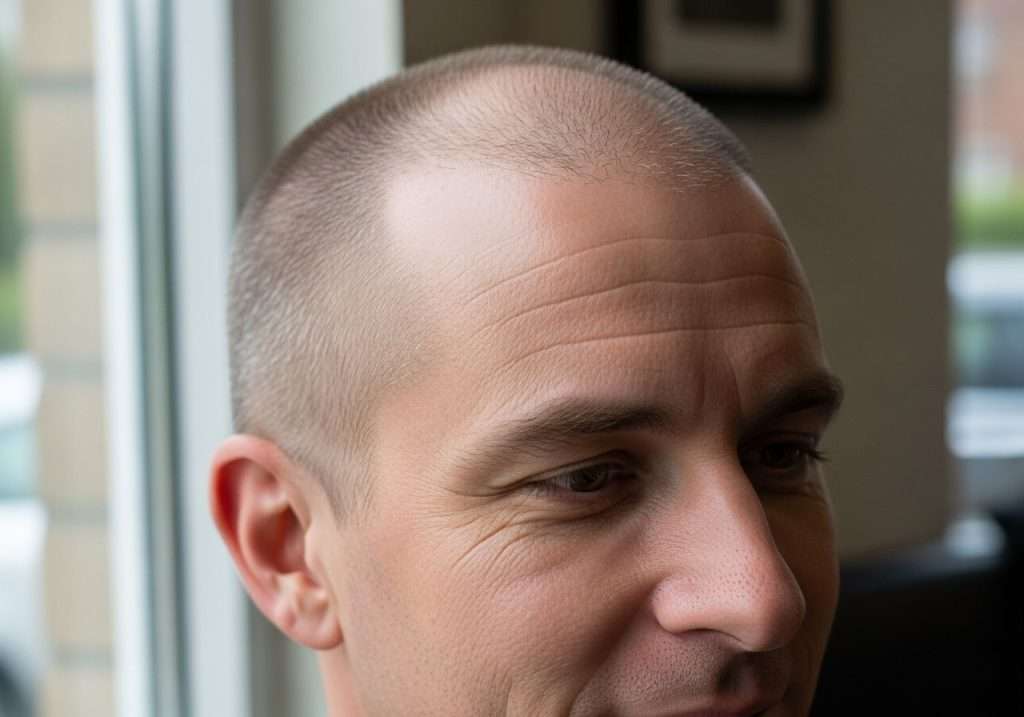
SMP density or a hair transplant: 5 things worth knowing first
You have accepted the hair loss. Now you want to do something about it, and you have landed on two options: SMP for density, or a hair transplant. Both can genuinely change how you look and feel, but they work in completely different ways. This article breaks down the five differences that actually matter, so you can walk away with a clear head and a better sense of which direction makes sense for you.
1. One replicates the look of hair; the other moves real hair
This is the most important distinction, and it is worth being direct about it. SMP, or scalp micropigmentation, uses medical-grade pigment deposited into the scalp to create the visual impression of hair follicles. It does not regrow hair, stimulate follicles, or affect your existing hair loss in any biological way. What it does is reduce the visible contrast between your scalp and your hair, so thinning areas appear denser.
A hair transplant, whether FUE (follicular unit extraction) or FUT (follicular unit transplantation), physically relocates hair follicles from a donor site, typically the back and sides of the scalp, to areas of thinning or loss. Those transplanted follicles grow real hair. The two approaches solve the same visual problem through entirely different means.
2. The cost gap is significant
Hair transplants in the UK typically run from £3,000 to well over £10,000, depending on the number of grafts required and the clinic you choose. Travelling abroad for surgery is cheaper upfront, but that price rarely accounts for follow-up care, correction procedures, or the practical costs of travelling post-surgery. Insurance does not cover either option.
SMP for density is usually spread across two to four sessions, with total costs that sit considerably lower than most transplant quotes. You are also not paying for anaesthesia, surgical facilities, or a medical team. Touch-ups are typically needed every three to five years rather than being a one-off lifetime investment, so it is worth factoring that into your comparison rather than looking at the upfront figure alone.
3. Downtime looks very different
After a hair transplant, you are looking at a real recovery. Swelling, scabbing, and tenderness in both the donor and recipient areas are normal in the first week. Most men take one to two weeks off work, avoid exercise for three to four weeks, and wait several months before the transplanted hair even begins to grow. Full results from a transplant can take twelve to eighteen months to materialise.
With SMP, there is no surgical downtime. The aftercare is specific, including no washing the scalp for the first four days and no swimming for twenty-eight days, along with SPF on the scalp once healed, but you are not recovering from surgery. Initial redness settles within two to three days. Full healing takes around thirty days after your final session, and results are visible immediately, even if they deepen slightly between sessions as the pigment settles.
4. Not everyone qualifies for a transplant
Hair transplant surgery requires sufficient donor hair, meaning dense, healthy follicles at the back and sides of the scalp that can be harvested without visibly thinning the donor area. If your hair loss is extensive, if your donor density is already low, or if you have diffuse thinning across the whole scalp, a surgeon may tell you there simply is not enough to work with.
SMP for density has a much broader candidacy range. It works for male pattern baldness at any stage, alopecia areata, scarring alopecias, post-transplant density improvement, and chemotherapy-related loss. Even men who have already had a transplant often use SMP to fill in between grafts or improve the appearance of the hairline. Active scalp conditions such as psoriasis flare-ups or eczema, and keloid-prone skin, are the main contraindications to be aware of.
5. Longevity requires honesty from both sides
Hair transplants are often described as permanent, and the transplanted follicles themselves are resistant to DHT, the hormone responsible for male pattern baldness. However, the native hair around them continues to thin over time, which means many men need further procedures years down the line to maintain a natural-looking result. The transplant does not freeze your hair loss; it simply relocates follicles that will not be affected by it.
SMP results typically last three to eight years before a touch-up is worthwhile. Fading is gradual and natural-looking rather than sudden. Sun exposure, oily skin, and faster cellular metabolism can accelerate fading, while SPF application and dry skin types tend to support longer-lasting results. A 2025 case series reported visual density scores averaging 8.7 out of 10 immediately post-treatment, declining modestly to 7.7 at six months, which are strong numbers and an honest indicator of what to expect over time.
Neither option is objectively better. A hair transplant delivers real hair and, when done well, a genuinely natural result, but it is surgery, it is expensive, and candidacy is not guaranteed. SMP for density is accessible, lower risk, requires no surgery, and delivers visible results within weeks. The right answer depends on your hair loss pattern, your priorities, and how you feel about surgery. Both are worth understanding properly before you commit to either.
Frequently Asked Questions
Can SMP be combined with a hair transplant?
Yes, and it is more common than most people realise. Many men use SMP after a FUE transplant to fill in between grafts, disguise scarring, or improve hairline definition. The two approaches complement each other well, particularly when transplant coverage alone has not delivered the density a client was hoping for.
Does scalp micropigmentation look natural on a man with thinning hair rather than complete baldness?
It can look very natural, but technique matters enormously. For density work, pigment is applied between existing hairs to reduce visible scalp contrast rather than creating a shaved-head appearance. Pigment dot density is built up progressively across sessions, typically starting at around 40 dots per square centimetre and increasing to 80 to 100 in the final sessions.
Is SMP painful compared to a hair transplant?
Most men find SMP mildly uncomfortable rather than painful, comparable to a light scratching sensation. Numbing cream is not applied as standard during SMP sessions, though it can be applied beforehand if preferred. Hair transplant surgery is performed under local anaesthesia, so the procedure itself is not painful, but the recovery period involves soreness and tenderness for several days.
How long does male density SMP actually last before it fades?
Results typically last three to eight years depending on your skin type, sun exposure, and lifestyle. Men with oily skin or high sun exposure tend to see earlier fading. Regular SPF application after the thirty-day healing period slows the process significantly. Touch-ups are usually straightforward and much shorter than the original treatment sessions.
What happens if I decide I no longer want SMP?
SMP can be lightened or removed using laser tattoo removal, specifically laser systems calibrated for scalp pigment. It is a gradual process requiring multiple sessions, but full removal is achievable in most cases. Unlike a hair transplant, there is no surgical reversal involved. This makes SMP a lower-commitment starting point if you are weighing up your long-term options.